

Natural Selections
Antibiotics Turned Anti-Amphibian
Pollution from powerful, infection-fighting medications could accelerate amphibian decline by turning a potential solution into a threat.
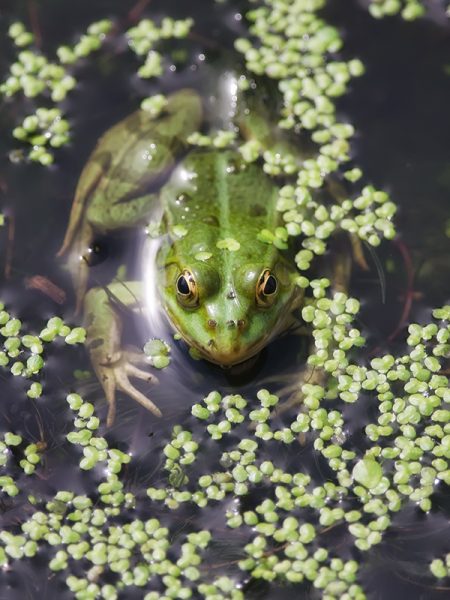
Frogs, toads, salamanders, and other amphibians are disappearing as fast as — or faster than — any other class of animals around the world as they succumb to emerging infectious diseases and other threats. Now there’s an ironic twist in this tale of survival. A recent CALS study shows that one promising way to protect frogs from a particularly deadly fungal disease may be less useful than previously thought because many waterways are polluted by a common treatment for infections: antibiotic drugs.
The fungus, known as Bd, or Batrachochytrium dendrobatidis, is responsible for a skin disease that has contributed to declines in amphibian diversity in many parts of the world. But Bd doesn’t have free rein, even in ponds where it causes many infections. The fungus has microscopic enemies — microbes competing hard in their own ecological niches. Scientists have hypothesized that chemical mixtures produced by those microbes could act like a vaccine against Bd.
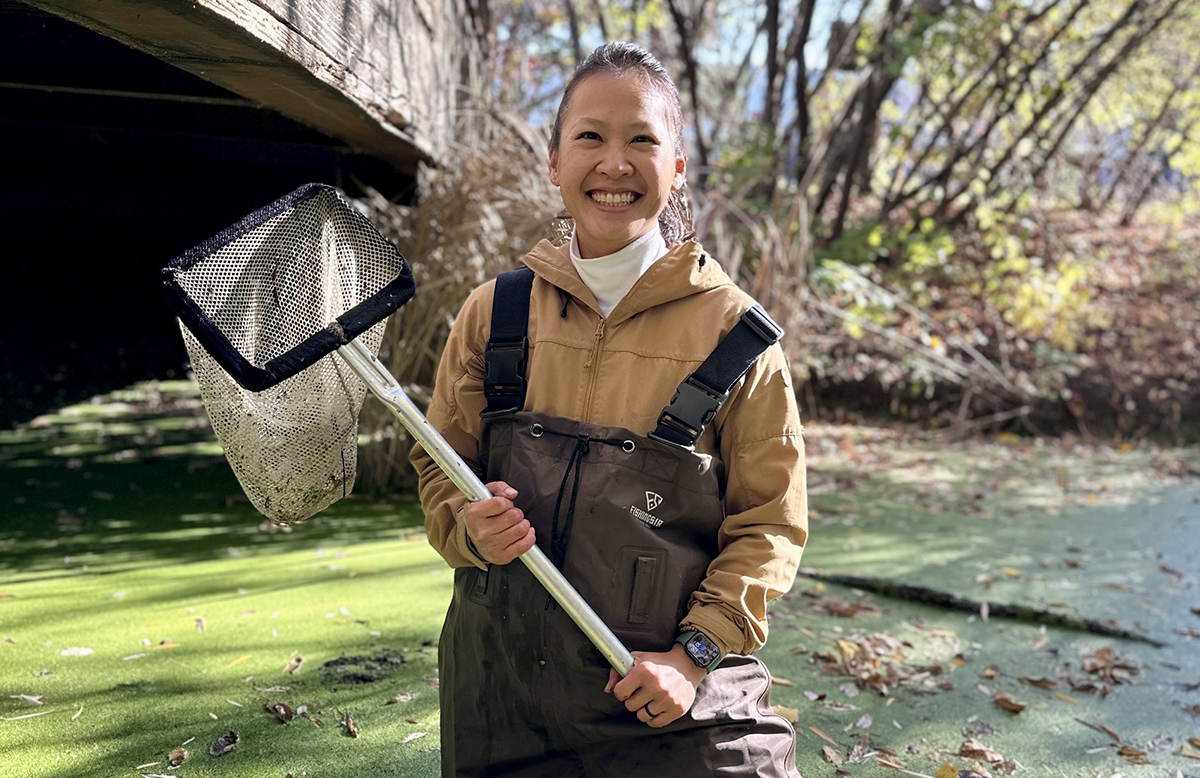
“In your own microbiota — in your gut, on your skin — you have different species of bacteria living in a particular area,” says Jessica Hua, a professor of forest and wildlife ecology who studies how ecosystem disturbances such as pollution affect ecology and evolution. “When there’s high competition, particular microbial species like these generate compounds that inhibit other bacteria and microorganisms from succeeding.”
Those chemical defenses are a reaction to the bacteria’s environment. But competition with fungi like Bd is just one aspect of the environment to which microbes need to adapt. Increasingly, bacteria must contend with water contaminated by antibiotic drugs — a pollutant growing more common in waterways affected by runoff from farms, zoos, and wastewater treatment plants.
Hua and her colleagues wanted to find out whether a common bacterium, Pseudomonas aeruginosa, retains its Bd-fighting abilities while also fending off assaults from antibiotic pollution.
“Depending on the environment they live in, those bacteria may react by changing that anti-pathogenic cocktail of compounds they produce,” Hua says. “If they’re really comfortable and stress-free, they might put their resources into growth or some other need. If they have to adapt to a new or unusual problem, like pollutants, that can come at a cost that shifts the cell physiology of the microorganism.”
Hua’s lab, with collaborators at Binghamton University and New Mexico State University, exposed Bd to two different chemical cocktails: the mix produced by strains of Pseudomonas that had adapted to water contaminated by antibiotic drugs and the chemicals made by Pseudomonas that hadn’t had to figure out how to survive alongside antibiotics. They also raised tadpoles in water with Bd and the chemical cocktail from bacteria that had not been forced to adapt to antibiotics.
The chemical mix from Pseudomonas that hadn’t been exposed to antibiotics was indeed bad news for Bd. It reduced the fungi’s growth rate significantly in lower concentrations and entirely in large doses. Tadpoles benefited too. They were less likely to be infected with Bd while living in water with the bacteria that hadn’t developed tolerance to antibiotics.
However, chemicals from Pseudomonas that had adapted to antibiotic pollution actually helped Bd. The troublesome fungi grew faster in water with the products of antibiotic-tolerant Pseudomonas; tadpoles in that mix were six times more likely to be infected with Bd than those paired with chemicals from bacteria unbothered by antibiotics.
“This shows us that if we’re going to develop some sort of treatment for an emerging disease this way, we have to consider the history of the microbes we’re looking at,” Hua says. “The traits, the effect on amphibians you’re looking for could very easily change — and here we’ve seen them change from help to harm — especially in light of increasing pollution.”
To further complicate matters, the scientists repeated their experiments with strains of Pseudomonas that clump together in colonies called biofilms instead of strains that float free in water. The results flipped. The chemical cocktail from biofilm-forming Pseudomonas that had not encountered antibiotics was worse for the tadpoles and better for Bd; the antibiotic-tolerant biofilm-forming bacteria inhibited Bd growth and kept tadpoles healthier longer.“It was surprising to see just how opposite it was with just this change in Pseudomonas behavior,” Hua says. “There are so many considerations. Ignoring them, we might actually do more harm than good.”
⊕ Federally Funded Research
This research, published in July 2025 in Scientific Reports, was supported in part by grants from the National Science Foundation (2137424 and 2314625).
This article was posted in Healthy Ecosystems, Natural Selections, Spring 2026 and tagged amphibians, Antibiotics, Forest and Wildlife Ecology, fungus, Jessica Hua, Microbiome, pollution.