

Natural Selections
What a Wild Bee Wants
Planting more pollinator-friendly flowers can’t counteract the negative effects of pesticides on wild bees, a new study says, suggesting that reduced chemical use is more important for conservation efforts than increased habitat.
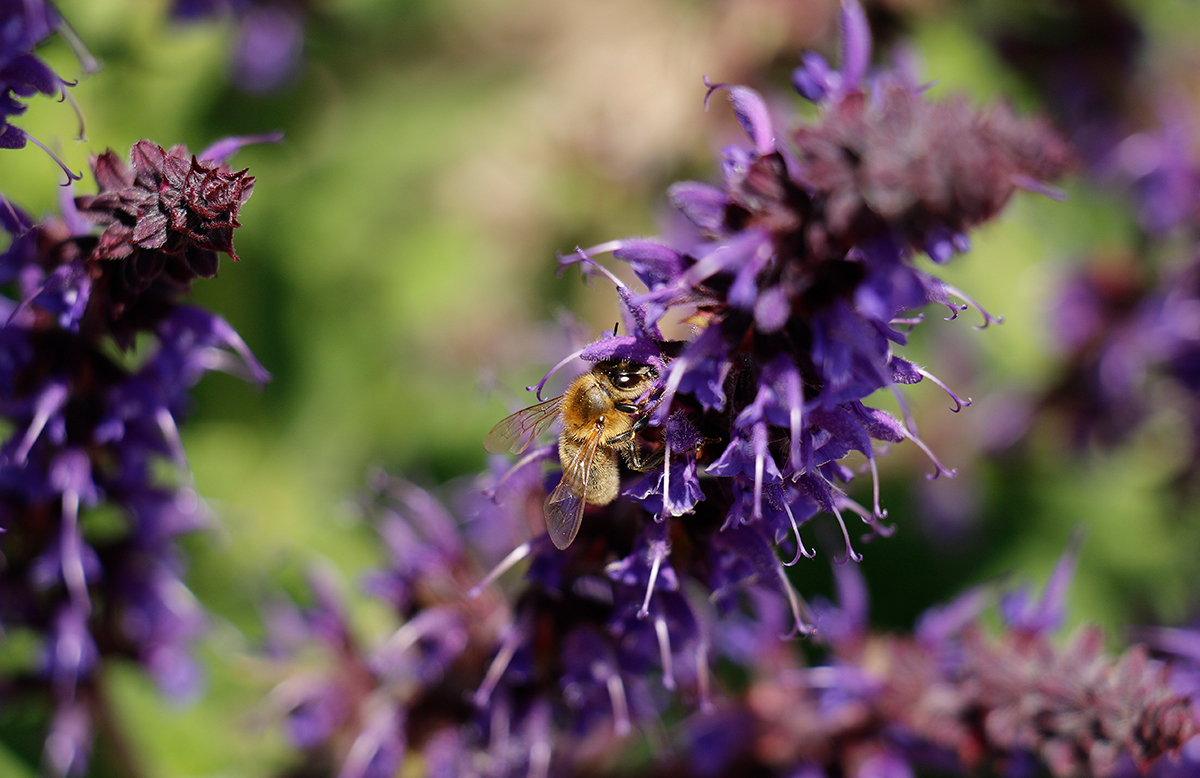
Plant wildflowers, save the bees — or so the thinking goes. Agricultural authorities around the world promote restoring hedgerows and seeding flower strips between fields as pollinator havens. One of the hopes is that creating bee-friendly habitats in agricultural landscapes might offset some of the harm caused by pesticides.
But new research by an international team of scientists, including entomology professor Claudio Gratton, reveals a hard truth: While it can help to sow the seeds of beneficial plants such as lavender, iris, sunflowers, and goldenrods in field margins, these flowers don’t offset the damage wrought by pesticides.
“People have hypothesized that in areas where there is more natural habitat, where bees can make a home and get food, then the impact of pesticides might be mitigated in some way,” Gratton says. “But it turns out that’s not really the case.”
The surprising results appeared in December 2025 in Nature Ecology & Evolution. The authors, which include Gratton, his former graduate student Rachel Mallinger MS’09, PhD’15, and dozens of European colleagues, sifted through dozens of studies from around the world, tracking pesticide exposure, surveying bee communities, and mapping habitats around crop fields. Altogether, their analysis covered 910 bee species across 681 fields on three continents. Among the data was a study of Wisconsin’s apple orchards (led by Mallinger, now an associate professor at the University of Florida), which shed light on local bee populations.
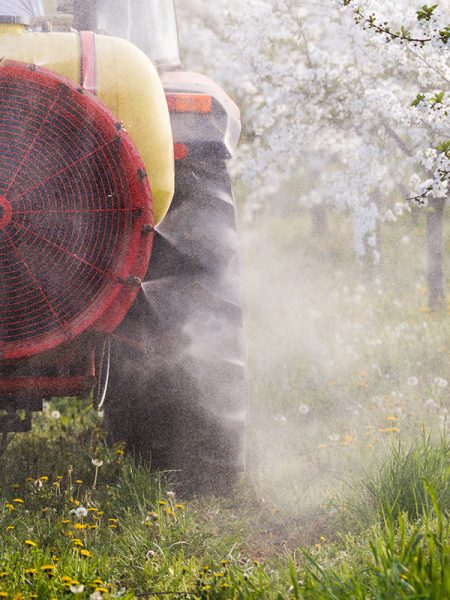
“We wanted to gather up all the studies on this topic and ask: When people study the things that we think are stressing out wild bees, can we see any general patterns?” Gratton says.
Some of the results were in line with expectations. Pesticides did reduce both bee numbers and species diversity. But restored habitats — although beneficial — could not counteract these chemical effects. “Where there’s worse habitat, you get fewer bees. And where there’s better habitat, you get more bees. But you don’t see a mitigation of the pesticide effect,” Gratton says.
The exact reasons for this are not clear. But Gratton has a theory. It’s possible, he explains, that the bee populations most heavily impacted by pesticides struggle to travel. “Bees may not be able to venture too far out into the landscapes to benefit from these habitats if they have been exposed to pesticides,” Gratton says.
It’s a critical finding. Pollinators — which include bees, butterflies, moths, beetles, and even certain birds — play an essential role in food security. Thirty-five percent of the world’s crops depend on pollinators. These plants, such as apples and almonds, provide most of the nutrients that humans consume.
But bees are in serious trouble. Global populations are declining. Along with habitat loss and disease, pesticides are a major factor. The chemicals make bees sluggish, interfere with reproduction, and can even cause paralysis.
It’s not just the number of bees that matters. Species diversity is also crucial. Over the course of a multi-year study, Mallinger discovered that 90 different species of bees visit Wisconsin apple orchards. That diversity buffers the risk. “It you only have just one pollinator species that’s doing everything for you, and for whatever reason you have a bad year, you’re done,” Gratton says.
So what can farmers who want to build pollinator resilience do? The key is to minimize pesticide use. That might seem daunting to some growers; but, says Gratton, the benefits of pesticides tend to be overstated.
For some vegetable crops, yield gains achieved via pesticide use are “very small, if they even exist at all,” he says. And for pollinator-dependent crops, insecticides can reduce yields because they kill the very creatures the plants need to survive. “You tend to get a negative effect on yield. You’re throwing money away,” Gratton says.
Still, Gratton sees reasons for optimism. Since joining CALS in 2003, he has noticed a shift in the conversation. The farmers he speaks with across the Midwest increasingly recognize the threats pollinators face.
“That awareness was not around when I first started at UW,” he says. “Increasingly, people know that pesticides kill bees, and that we need to be as targeted and judicious about their use as we can be.”
This article was posted in Food Systems, Natural Selections, Spring 2026 and tagged Bees, Nature Ecology & Evolution, Pesticides, pollinators.