

Natural Selections
Wayfinders in the Health Care World
Through an advocacy program at the Center for Patient Partnerships, students help Madison-area residents traverse a complicated medical system.
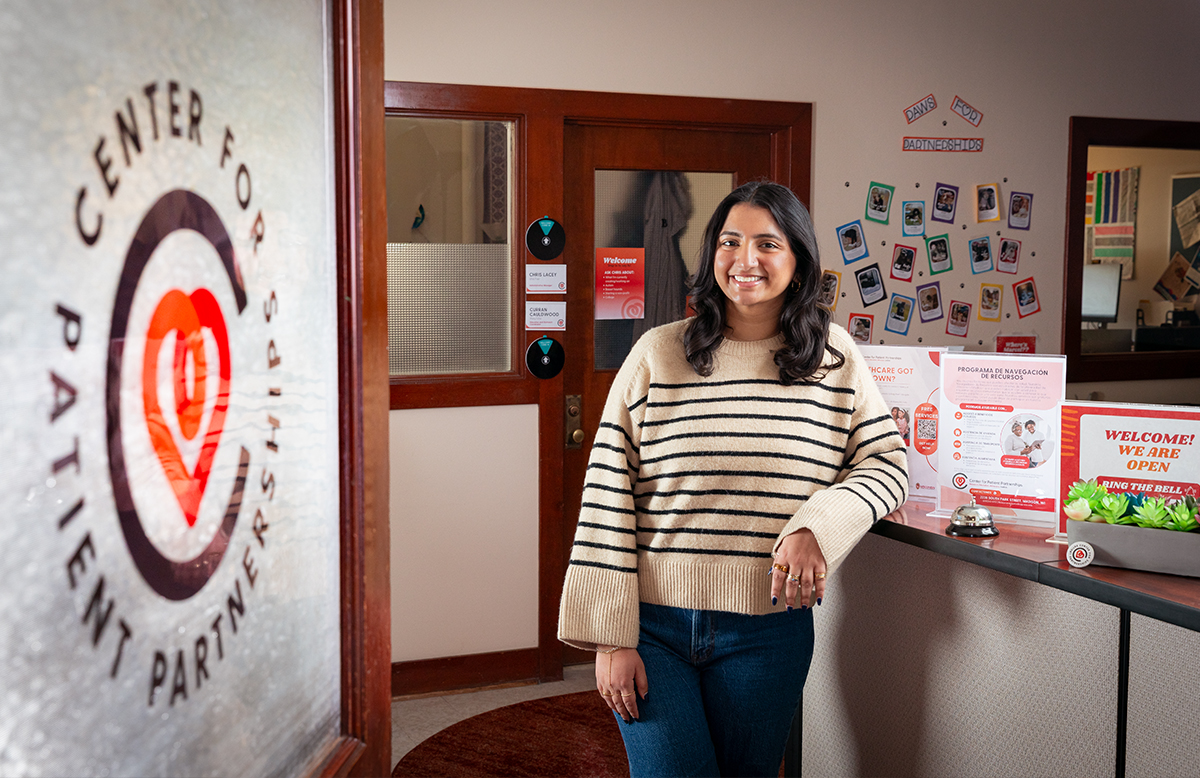
Last fall, Amal Vellani BSx’26 found herself serving as a private detective of sorts. As part of the Community Resource Navigator Program (CRNP), Vellani was helping an older woman named “Betty” find her way back to the doctor who had treated her blood clot. Betty and her husband, who both speak little English, had tried without luck to track down the provider.
So Vellani started sleuthing. Working through a translator, she and the couple called multiple clinics and kept tabs on responses. After a month of diligence, Vellani was able to find the urgent care clinic Betty had visited and ensure a follow-up appointment with the same doctor.
Vellani’s investigation for Betty is just one of many that CRNP undergraduates, called “navigators,” have led to help Wisconsin residents negotiate the many facets of health care, from visiting a doctor or finding healthy food to negotiating a stressful financial situation. Launched in 016, CRNP aims to help residents access a variety of health and community resources. The program also helps undergraduates who are interested in health-related professions learn about the health care system through hands-on work with community members. CRNP is part of the Center for Patient Partnerships (CPP), which moved from another part of campus to CALS and Agricultural Hall last year.
“I came in thinking I was going to be helping clients with very specific resources like medical appointments or food, things like that,” says Vellani, a senior majoring in global health and in health promotion and health equity, who is continuing as a navigator this spring. “But it’s truly anything from legal information to transportation help or rent assistance. We’re trying to make life easier for community members in the Madison area.”
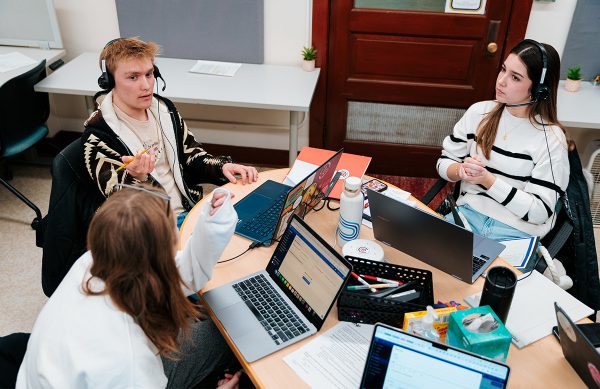
Each semester, around 20–25 new navigators take part in a service-learning course with two components: a weekly class and 50 hours of service. During the class, students meet with instructors Ashleigh Ross and Samantha Russo and learn how to support patients through phone calls. Ross, the community resource program coordinator, develops the curriculum, while Russo, the bilingual community resource educator, manages interactions between the navigators and their clients. The undergrads also hear from guest speakers, who provide information about resources that are available to patients in the Madison area.
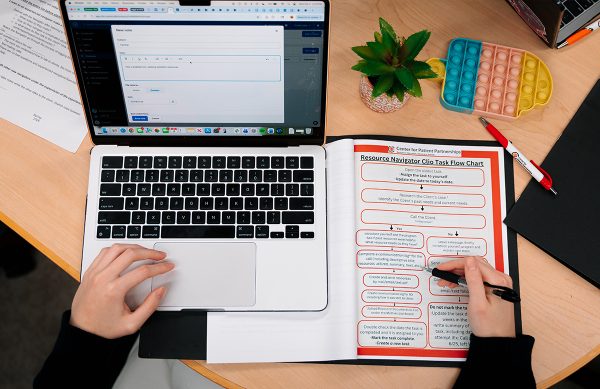
For the service component of the course, students work “call shifts” for four hours each week, where they connect with clients by phone, drawing from a database of around 375 active cases. Students make calls from Agricultural Hall or from the UW South Madison Partnership building on the city’s south side, often working with translators to better communicate with the predominantly Spanish-speaking clientele. Some shifts may be spent leaving voicemails or sending emails to multiple patients. Sometimes a caller may speak to a single client for the entire shift, lending a sympathetic ear to someone who may have few other outlets. CRNP has served more than 700 clients since its launch.
“On the calls, we figure out what we can offer the clients, and then we create resource documents for them,” explains Vellani, who is also pursuing certificates in athletic healthcare and health policy. “We share that document with them, and then we follow up each week or every two weeks. We’re able to really build relationships with clients over time.”
Navigators also connect new patients with the program. Each Saturday, CRNP partners with the UW–Madison School of Medicine and Public Health during a free clinic, called MEDiC, for underinsured and uninsured patients. As the patients wait for their medical appointments to begin, staff and students from CRNP tell them about the program’s services and, if they’re interested, help them fill out an intake form to identify their needs and priorities. Navigators follow up with those clients at a later date.
Student navigators come from many majors. Like Vellani, some are interested in global health, a CALS-based major, while others are pre-med or pre-law or interested in criminal justice or social work. Though their interests vary, Ross says they value exploring the many aspects of wellness, and they appreciate finding common ground with other students.
“A really nice component of the program that’s more informal is the community that’s built among the navigators,” Ross says. “We hear from a lot of navigators that it’s not only a great learning environment but also a way to form friendships with people who share their interests and passions.”
With a sense of purpose and desire to help others, many CRNP undergraduates (usually around 15 per year) choose to continue with the program for more than one semester. Some returning navigators also take on training roles.
“I have realized I really like working in the back end of health care on logistical aspects and connecting with people,” says Vellani, who plans to pursue a master’s in public health after graduation. “I think more than half of our class came back this spring, which really speaks to what a great program it is.”
Returning navigators also conduct research projects that strengthen partnerships throughout the city. This includes work with Covering Wisconsin, an organization that provides insurance navigation, and the Neighborhood House Community Center, where a continuing navigator aims to provide more consistent service this spring. By collecting data and conducting evaluations through these projects, navigators also find ways to improve CRNP.
“What’s really exciting about having the returning navigators is that they’ve spent so much time in the first semester learning about the program and challenges people are facing that they’re able to see the gaps in the resources available and the gaps in the program,” Ross says. “They’re able to provide a lot of feedback and recommendations, and they’re helping to build the internal structure of the program as well as the wealth of knowledge.”
For members of the community, more resources and knowledge lead to better aid. While navigators sometimes face hang-ups or complaints of wasted time on their calls, the successes shine through, such as Vellani’s work to find Betty’s doctor.
Beyond having access to new resources, patients also report appreciating the navigators’ efforts to listen and understand. As one patient states, “It makes me feel like someone cares, that I have support. It helps me and motivates me to thrive and do better for me and my daughter with the help that I’m provided.”
“In general, the feedback is very positive,” Russo says. “A lot of our patients are trying to navigate systems that weren’t designed for them. There can be a lot of social isolation, and sometimes the navigators are the only people our clients talk to. They tell us they can feel we care and that, in the world today, that’s a rare thing.”
CPP was founded in 2000 by UW alum and professor emerit of law Meg Gaines and her colleagues after she experienced firsthand the struggles of navigating the health care system during her battle with ovarian cancer. The center’s focus on partnerships between patients and medical and legal professionals has since become a model for patient advocacy, education, and health justice. CPP is celebrating its 25th anniversary this spring.
“Students learn and serve by providing advocacy and navigation to Wisconsinites, which helps patients access care and community services that support whole health,” says CPP director Sarah Davis. “The high-impact learning for undergraduate and graduate students in our programs truly embodies the Wisconsin idea.”
This article was posted in Beyond classroom experiences, Economic and Community Development, Health and Wellness, Natural Selections, Spring 2026 and tagged Center for Patient Partnerships, Community Resource Navigator Program, Global health, health care.